
Tư vấn - Máy nén trục vítSỬ DỤNG MÁY NÉN KHÍ ĐỂ KHOAN GIẾNG NƯỚC I
Ở hầu hết các nơi, nước được đào lên từ lòng đất để uống. Ngày xưa, giếng thường được đào, nhưng khi mực nước ngầm rút xuống, độ sâu tăng lên, ngày nay giếng nước 4,5”-4,75”, 6” – 6,5” rất phổ biến. Giếng ống đã trở thành thứ tự trong ngày để tiếp cận nước uống được từ lớp vỏ trái đất

- TỔNG QUAN NGẮN GỌN VỀ CÁC ỨNG DỤNG KHOAN GIẾNG NƯỚC
Thiết bị khoan giếng nước bao gồm giàn khoan nước, máy nén khí và các phụ kiện như cần khoan, ống vách và búa. Trong hầu hết các trường hợp, để khoan giếng nước sâu hơn, khoan DTH được áp dụng. Khoan DTH là một cách hiệu quả để khoan các lỗ sâu hơn ở dạng trung bình hoặc cứng vì tác động búa được cung cấp ngay trên mũi khoan ở đáy lỗ.
- QUÁ TRÌNH KHOAN
Thông thường, một máy khoan giếng nước bao gồm các hoạt động sau:
- Một lỗ lớn được khoan để chèn ống vách (bất cứ nơi nào trong khoảng 20-200 ft) bằng cách sử dụng búa Over Burden
- Loại bỏ lớp trên cùng của vỏ trái đất để ngăn chặn bất kỳ vật liệu sụp đổ nào vào giếng.
- Sau đó, một lỗ có kích thước thực được khoan.
Ngày nay ở Ấn Độ, độ sâu trung bình dao động từ 800-1200 ft tùy thuộc vào mực nước ngầm trong khu vực được xem xét.
- CÁC GIAI ĐOẠN KHOAN KHÁC NHAU
Đối với máy nén giếng khoan, có 2 khía cạnh rất quan trọng trong bất kỳ máy nén nào
- Trạng thái khoan: Trong giai đoạn này, cần có khí nén ở áp suất cần thiết để búa hoạt động hiệu quả. Trạng thái khoan chiếm 75-80% toàn bộ chu kỳ khoan. Hiệu suất của máy nén rất quan trọng trong việc đảm bảo lợi nhuận cho chủ sở hữu giàn khoan.
- Trạng thái tuôn ra: Giai đoạn này yêu cầu luồng khí nén tối đa để loại bỏ các phần cắt/mảnh vụn ra khỏi lỗ. Trạng thái này đóng một vai trò quan trọng trong việc xác định mức tiêu thụ nhiên liệu của máy nén nói chung, vì máy nén tiêu thụ nhiều nhiên liệu hơn nếu xả quá nhiều. Thông thường, xả nước dao động từ 10-15% của toàn bộ chu kỳ khoan.
- Một trạng thái khác là chạy không tải khi máy nén không cung cấp không khí, tuy nhiên, nó vẫn ở trạng thái đó vì giàn khoan sẽ trải qua hoạt động thay đổi thanh.
Độ sâu của giếng nước phụ thuộc vào sản lượng nước hoặc cho đến khi khách hàng muốn thử nước. Tìm điểm khoan là một chủ đề khác để thảo luận vì có nhiều cách, có thể là sử dụng phương pháp khoa học sử dụng nhà địa chất hoặc phương pháp truyền thống như sử dụng máy phân tích nước.
A brief overview of water well drilling applications
Water well drilling equipment consists of a water well rig, air compressors & accessories like drilling rods, casing pipes, and a hammer. In most cases, for deeper water well drilling, DTH drilling is adopted. DTH Drilling is an efficient way of drilling for deeper holes in medium or hard formations as hammering action is provided right on the drill bit at the bottom of the hole.
To fulfill the requirements of water well drilling applications, ELGi manufactures efficient and rugged compressors.
Here is look at the typical mounting of the equipment in water well drilling application:
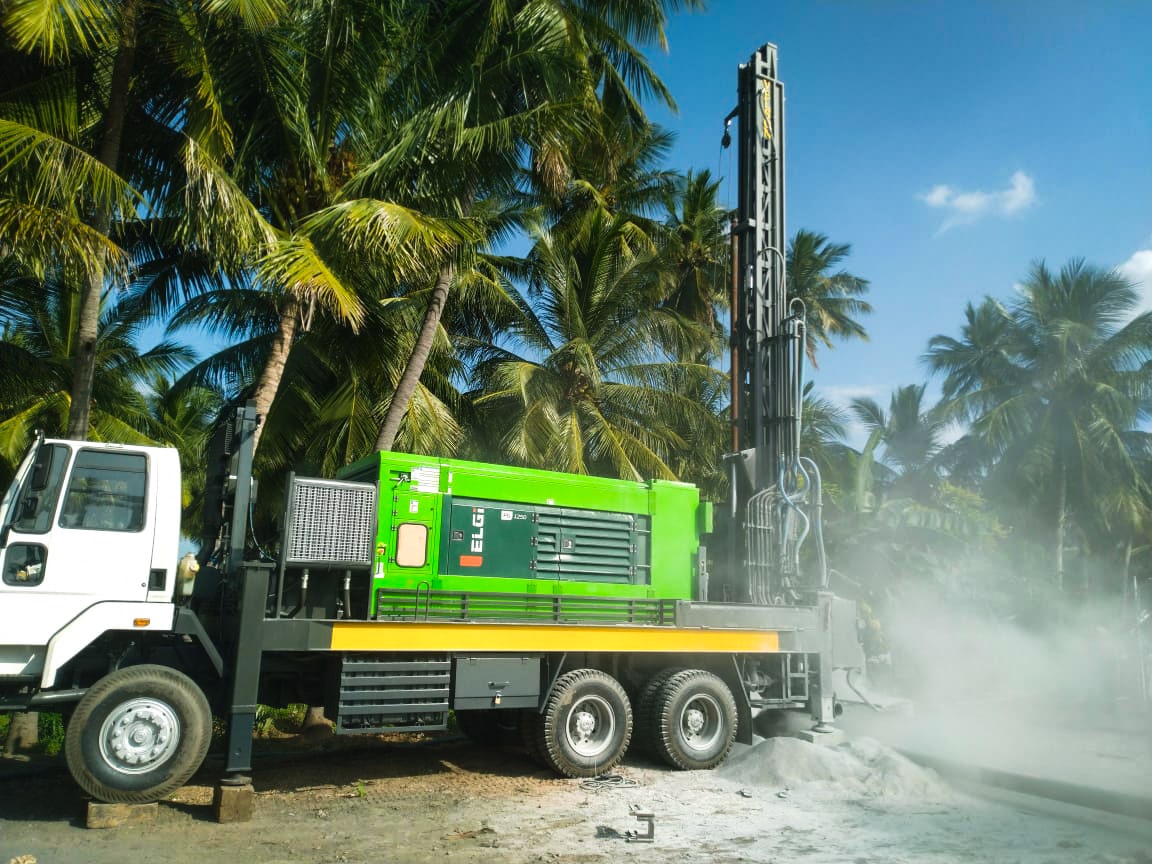
Both Compressor and Rig in the same truck.
The process of drilling
Typically, a water well drill consists of the following activities:
A large hole is drilled to insert casing pipe (anywhere between 20-200 ft) using the Over Burden hammer
Which removes the top layer of the earth's crust to prevent any collapsing materials into the well.
Then, a hole of the actual size is drilled.
Today in India, the average depth ranges from 800-1200 ft depending on the water table in the zone under consideration.
Different stages of Drilling
For water well compressors, there are 2 very important aspects in any compressors.
Drilling state: In this phase, compressed air is needed at the required pressure for efficient hammer performance. The drilling state forms 75-80% of the overall drilling cycle. Compressor performance is critical in ensuring profits for the Drill rig owner.
ELGi compressors deliver the required amount of compressed air to ensure optimum drilling.
Flushing State: This phase requires the maximum flow of compressed air to remove the cuttings/debris from the hole. This state plays a critical role in determining the fuel consumption of the compressor overall, as generally, the compressor consumes more fuel if flushing is too much. Typically, flushing ranges from 10-15 % of the overall drilling cycle.
Another state is idling where the compressor delivers no air, however, it remains in that state, as the rig will undergo rod change activity.
A water well depth depends on water yield or until a customer wants to try for water. Finding a drilling point is a different topic for discussion as there are multiple ways, be it using a scientific method of using a geologist or a traditional method like using a water diviner.